
If you manufacture control cables—brake lines, clutch cables, throttle wires, window regulator cables—you know the wire rope inside them is not a commodity. A bad batch means field failures, warranty claims, and production shutdowns. But evaluating suppliers is hard when every factory says the same thing on their website.
This checklist gives you six specific questions to ask any prospective wire rope supplier, what to listen for in their answers, and how to spot the difference between a real specialist and a generalist who just lists control cables as one of fifty applications.
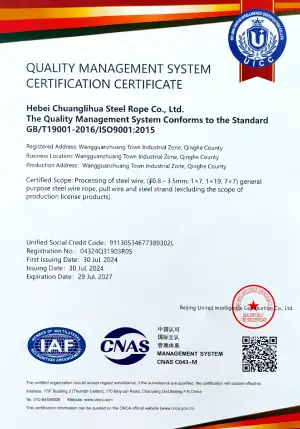
1. Which certifications and production licenses do you hold, and which specific standard does your control cable wire rope comply with?
Why this matters
ISO 9001 is the baseline—it tells you the factory has a documented quality management system. But for control cable applications, you need to go further. Ask which product standard the wire rope is manufactured to. For control cables, the applicable Chinese national standard is GB/T 14451-2008—this is specifically for steel wire rope used in control mechanisms. If the supplier quotes a general-purpose rope standard, they may not understand the distinction.
Not only is this to judge whether the factory has standard management, but also, your downstream customers may require the entire supply chain to hold relevant qualifications.
Also, ask about production licensing. In 2024, China updated its Industrial Product Production License regulations for steel wire rope. Manufacturers had to requalify under stricter criteria. A supplier that was among the first in their province to obtain this updated license is telling you something about how seriously they take compliance. This is not a routine paperwork exercise—it involves on-site audits of production processes, testing equipment, and quality records.
What to ask
- Which exact product standard applies to your control cable wire rope?
- Do you hold the latest (2024) Industrial Product Production License?
- Can you show me a sample Mill Test Certificate for a recent control cable shipment?
What a good answer sounds like
- “GB/T 14451-2008. Here is a sample MTC with breaking force, zinc coating weight, and diameter tolerance data.”
- “Yes, we were among the first manufacturers in our province to obtain the 2024 updated license.”
What a weak answer sounds like
- “We comply with international standards.”
- “We have all the necessary certifications.” (without naming them)
2. How much finished wire rope inventory do you actually keep in stock for diameters between 1.0mm and 6.0mm?

Why this matters
Small-diameter wire rope for control cables is a volume business. The most common specifications—1.5mm, 2.0mm, 2.5mm, 3.0mm in 1×19 or 7×7 construction—should be sitting in the warehouse, not waiting to be produced. A supplier that carries hundreds of tons of finished goods inventory can ship regular stock items within days. A supplier that manufactures everything to order will give you lead times measured in weeks.
This matters even more for trial orders. If you want to test a supplier with a small quantity, the only way they can say yes without charging you a setup premium is if they already have the product in stock.
What to ask
- How many tons of finished galvanized wire rope do you stock right now?
- For my top three specifications, are they in stock or made to order?
- What is your typical ex-factory lead time for stocked sizes?
What a good answer sounds like
- “We keep approximately 500 metric tons of finished goods for regular control cable sizes. Most stocked items ship within 3 to 7 days after order confirmation.”
- “We also hold around 1,000 metric tons of raw material, so even non-stock orders go into production immediately.”
What a weak answer sounds like
- “We can produce any specification quickly.”
- “It depends on the order.” (without giving a specific number)
3. How do you inspect finished wire rope before it leaves your factory?

Why this matters
Control cables are safety-critical. A single broken wire inside a brake cable is not a cosmetic defect—it is a potential failure point. The question is not whether the supplier inspects, but how much they inspect.
Many factories perform batch sampling: they test a random section from each production run and assume the rest is the same. This is acceptable for non-critical applications. For control cables, you want a supplier that verifies every meter. Ask specifically about inline inspection during the spooling or coiling process, where operators can catch broken wires, diameter irregularities, and surface defects before the product gets packed.
What to ask
- Is every meter of finished wire rope inspected, or do you use batch sampling?
- How do you catch and handle a broken wire before it reaches the customer?
- Can you trace a quality issue back to a specific production shift, machine, and raw material batch?
What a good answer sounds like
- “Every meter goes through hands-on inspection during spooling. If a defect is found, the entire section is removed and the cause is traced back. We have over 60% of workers with more than 10 years of experience running this process.”
- “Yes, our ISO 9001 system tracks each batch from raw steel to finished product.”
What a weak answer sounds like
- “We have a quality control department.”
- “Our products are high quality.” (without describing the inspection method)
4. Can you cut, coat, and fit ends on the wire rope—all in-house?
Why this matters
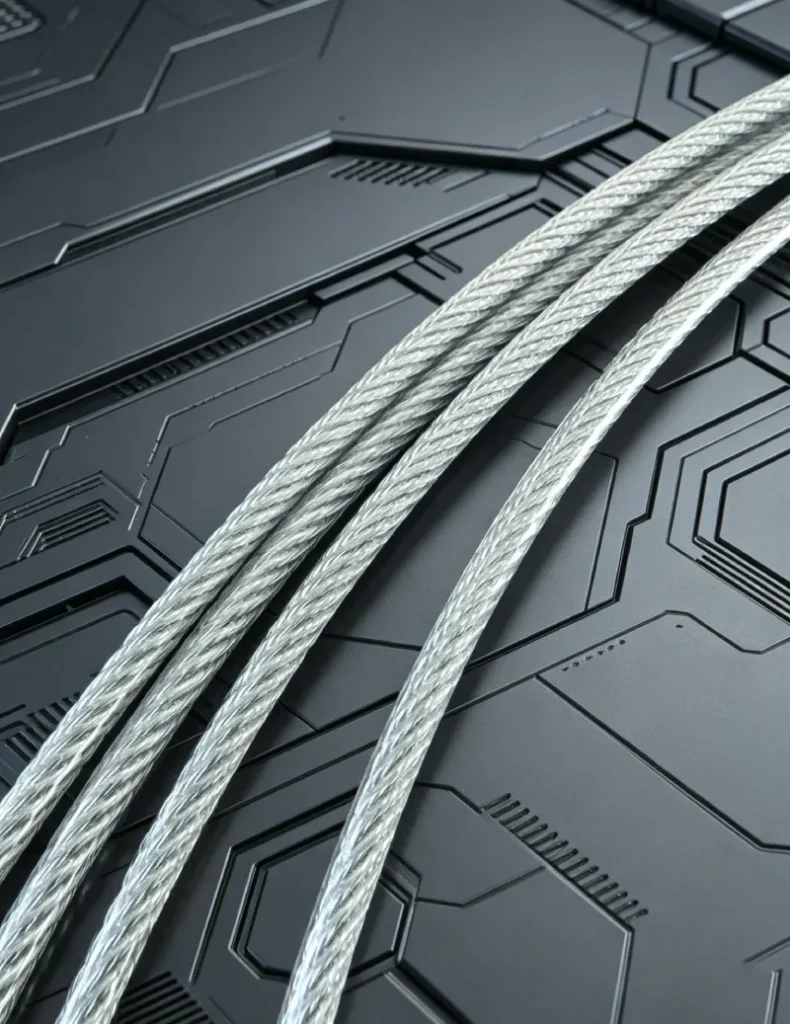
Bare wire rope is a raw material. What you may actually need is cut-to-length pieces, PVC or nylon coated wire, or rope with die-cast aluminum or zinc ends already fitted. If your wire rope supplier can only provide the bare rope and you have to find separate processors for secondary operations, you are managing three vendors instead of one.
A supplier with in-house secondary processing capabilities gives you shorter lead times, single-point accountability, and often lower total cost. It also means they understand what happens to their wire rope downstream, which feeds back into better quality at the wire production stage.
What to ask
- Which secondary processes do you handle in your own facility?
- Can you do PVC, PU, and nylon coating in different thicknesses?
- What is your minimum order for cut-to-length or die-cast end fitting services?
What a good answer sounds like
- “We do plastic coating, precision cutting, and aluminum or zinc die-cast end fitting all in-house. We can also customize spool types and packaging for your production line.”
What a weak answer sounds like
- “We can arrange that through a partner.”
- “Let me check with our workshop.” (if they cannot answer directly, they probably outsource)
5. What is your minimum order quantity for a first trial order?
Why this matters
You need to validate quality before you commit to volume. A supplier that imposes a high minimum order quantity on all items—including standard stock specifications—is either running so lean that they have no inventory, or they do not want small-quantity business. Neither is a good sign for a new relationship.
The ideal structure is straightforward: regular stock sizes have no minimum order quantity. Custom diameters, non-standard constructions, or special coatings have a defined MOQ—typically a few tons per specification—because they require dedicated production setup. This transparency tells you the supplier understands how procurement works: you test small, then scale up.
What to ask
- For your standard stock sizes, is there a minimum order quantity?
- For a custom diameter or non-stock construction, what is the MOQ?
- Can you ship a small trial order by courier or air freight, or is it sea freight only?
What a good answer sounds like
- “Regular stock specifications have no MOQ—you can order a few spools to test. Custom items typically require 5 metric tons per specification because we set up production specifically for that order.”
What a weak answer sounds like
- “MOQ is one container for all orders.”
- “It depends on the situation.” (without giving clear numbers)
6. Which industries do you primarily supply?
Why this matters
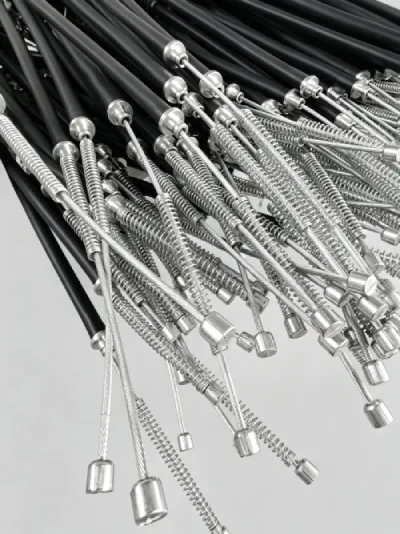
Wire rope is used in everything from bridge construction to fishing trawlers to art installations. A supplier that claims to serve all of these equally is either a massive conglomerate or, more likely, a generalist with no particular depth. Control cable manufacturing has specific requirements—tight diameter tolerance, consistent surface smoothness, and predictable bending fatigue life. You want a supplier for whom this application is a core business, not an occasional byproduct.
Ask whether they can name the types of control cable manufacturers they supply, what regions those customers are in, and what specifications are most commonly ordered for control cable applications. A supplier who can answer this immediately and concretely has real experience. A supplier who gives vague answers does not.
What to ask
- Do you supply other control cable manufacturers? In which countries or regions?
- What are your most commonly ordered specifications for control cable applications?
- Can you describe the requirements of a typical control cable customer and how you meet them?
What a good answer sounds like
- “Control cable manufacturers are our largest customer segment. We regularly supply wire rope for automotive brake lines, clutch cables, and window regulators. Our highest-volume specifications in this segment are 1.5mm to 3.0mm in 1×19 construction.”
What a weak answer sounds like
- “We serve many industries, including automotive.”
- “Wire rope is used in many applications, and we cover all of them.”
How to use this checklist
Send these six questions to every shortlisted supplier before you request a quote. The way they answer—specific numbers, named standards, concrete processes versus vague reassurances—will filter your shortlist faster than comparing price sheets ever will.
A supplier worth your business answers with specifics. A supplier who cannot tell you everything you need to know.
| # | Ask This | Expect This | Avoid This |
|---|---|---|---|
| 1 | What standard and license apply? | “GB/T 14451-2008. We hold the 2024 Industrial Product Production License.” | “We comply with international standards.” (vague) |
| 2 | How much inventory is in stock? | “500 tons finished, 2,000 tons raw. Stock ships in 3–7 days.” | “We can produce anything quickly.” (no numbers) |
| 3 | How do you inspect every meter? | “100% inspection during spooling. Defects traced. 60% of staff have 10+ years.” | “We have a QC department.” (no method) |
| 4 | Can you coat, cut, and fit ends in-house? | “Yes, all in-house — plastic coating, cutting, die-casting.” | “We can arrange that through a partner.” (outsourced) |
| 5 | What is the trial order MOQ? | “Stock specs: no MOQ. Custom specs: 5 tons.” | “MOQ is one container for everything.” (rigid) |
| 6 | Who are your main customers? | “Control cable makers. We ship to India, Iran, South America for brake/clutch lines.” | “We serve many industries, including automotive.” (generic) |