
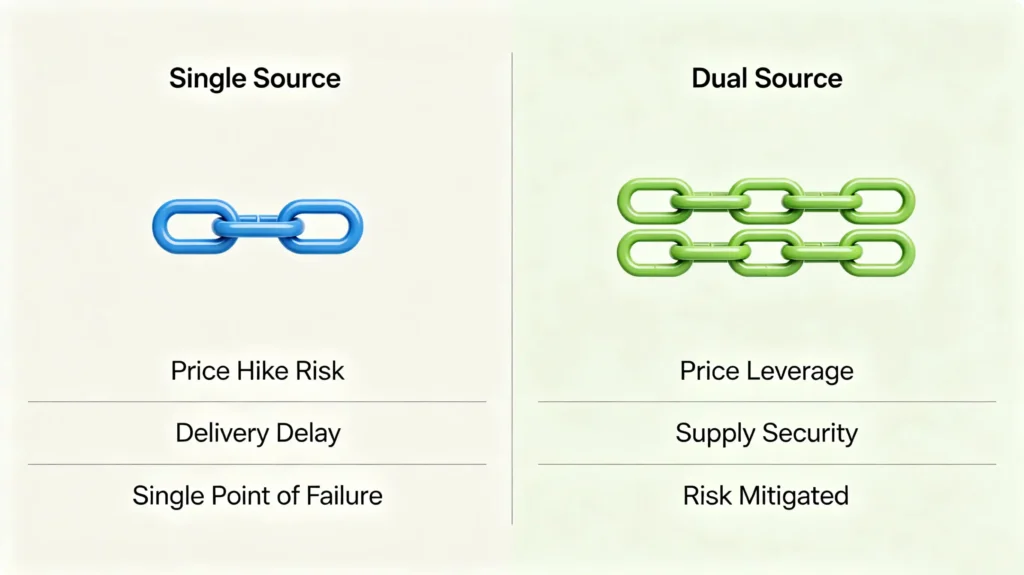
Relying on a single wire rope supplier for your control cable production is a calculated risk—until it isn’t. A sudden price hike, a delayed shipment, a quality dip on one batch. Any of these can halt your line. The fix is a qualified second source. But the reason most manufacturers don’t have one isn’t ignorance of the risk; it’s fear of the switching cost.
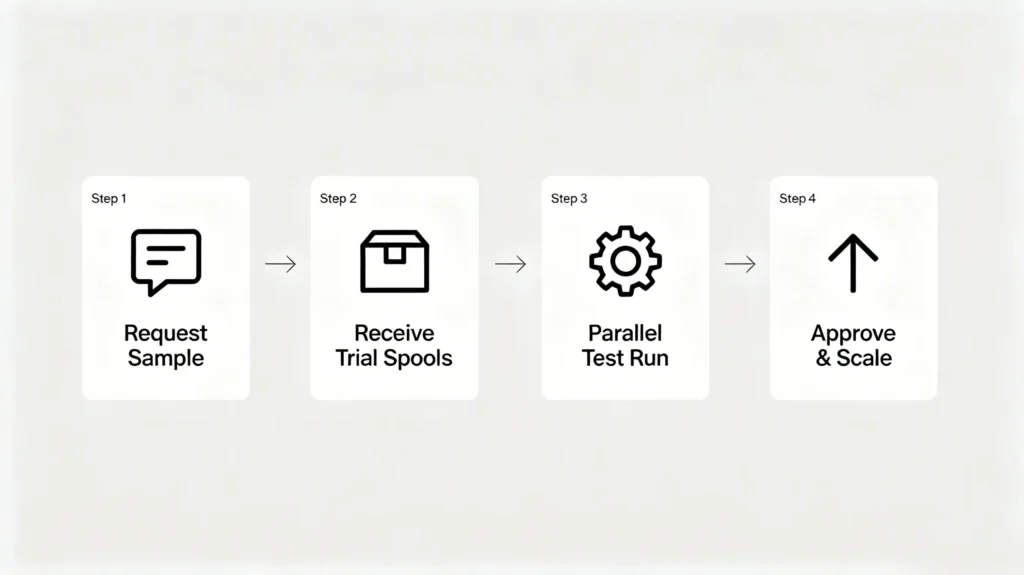
The truth is, a second source doesn’t require you to split volume immediately. It starts with a low-risk trial that costs a few spools, not a container. This checklist shows you exactly what to ask a potential backup supplier—and what a low-friction qualification process looks like.
1. How much finished stock do you actually hold in the diameters I use?
Why this matters
A second source is useless if they can’t ship when your primary supplier stumbles. The point is not to add a name to your vendor list; it’s to have inventory you can pull on short notice. Ask for a concrete number, not a promise.
What to ask
- How many tons of finished galvanized wire rope in my diameter range do you stock right now?
- For my top three specs, are they on the shelf or made to order?
What a good answer sounds like
- “We keep several hundred tons of finished stock. Your most common sizes ship within 3 to 7 days. If they’re not in stock, our raw material buffer means production starts immediately.”
What a weak answer sounds like
- “We can produce anything quickly.”
- “Lead time depends on the order.” (without specifics)
2. Can you match my current wire rope specification—exactly?
Why this matters
A backup supplier must replicate your existing spec, not just sell you something “close.” Small differences in diameter tolerance, zinc coating, or lay length can change how the wire rope behaves inside your conduit. Your assembly line shouldn’t have to adapt to a new wire rope; the wire rope should fit your process.
What to ask
- Can you produce to the exact standard and spec I currently use?
- Will you provide a pre-production sample with dimensional and mechanical data before the trial run?
What a good answer sounds like
- “Yes. Send us your spec sheet or a sample. We’ll match construction, coating type, zinc weight, and breaking force. We’ll send a data sheet with the pre-production sample.”
What a weak answer sounds like
- “Our standard product is similar; it should work.”
- “We don’t normally do that spec, but we can try.”
3. What’s the real minimum order quantity for a trial run?

Why this matters
The biggest barrier to qualifying a second source is the upfront volume commitment. A supplier that understands backup sourcing will accept a small trial order—maybe just one roll—on stock sizes. If they demand a TONS QUANTITY for a trial order, they’re not a second source; they’re demanding the commitment of a primary source before you’ve validated anything.
What to ask
- For stock specifications, is there a minimum order quantity?
- Can I start with a handful of spools to run in parallel with my current supply?
What a good answer sounds like
- “Regular stock specs have no MOQ. You can order a few spools for testing. Custom specs have a defined minimum, usually 5 tons.”
What a weak answer sounds like
- “Our MOQ is one container for all orders.”
- “We don’t do trial orders.”
4. How fast can you get a representative sample into my hands?
Why this matters
Speed of sampling tells you how the supplier operates under pressure. If it takes three weeks to ship a few sample spools, imagine what happens when you need a rush order. A supplier with ready stock and efficient logistics can ship samples by courier or air freight within days.
What to ask
- If I confirm a spec today, when do I receive the trial samples?
- Can you ship by air courier for the trial order?
What a good answer sounds like
- “We can prepare and ship samples within 2 to 3 working days. Courier delivery takes another 3 to 5 days depending on your location.”
What a weak answer sounds like
- “Sample lead time is the same as bulk orders.”
- “We’ll ship when it’s ready.” (no date commitment)
5. How do I run a parallel test without disrupting my current production?
Why this matters
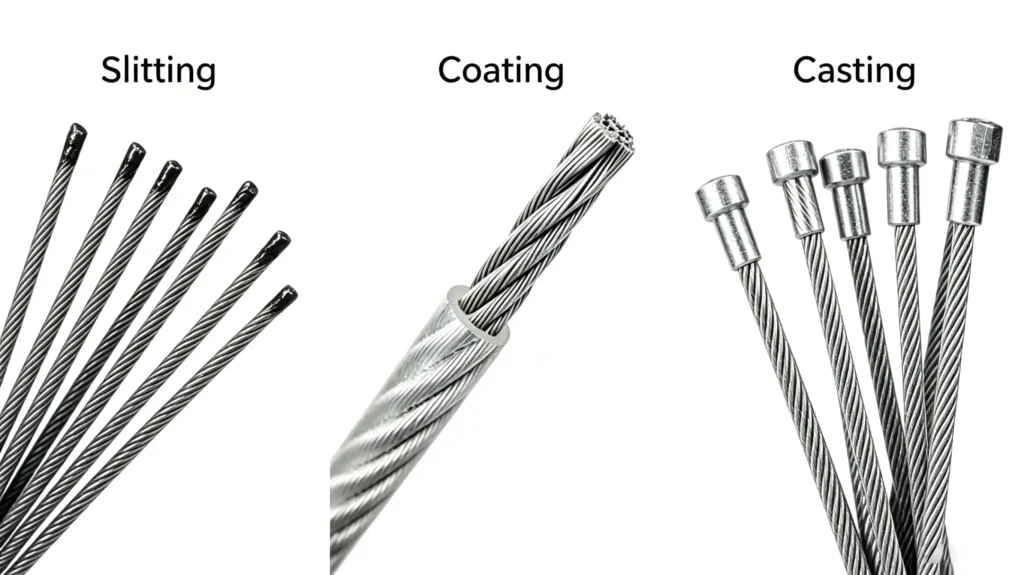
Testing a new wire rope supplier doesn’t mean you stop using your existing one. You run a parallel batch: same cable assembly line, same conduit, same end fittings—only the inner wire rope changes. The key is to design a test that isolates the one variable that matters. Ask the supplier if they can hold the same production batch for a possible follow-up order, so your test results match future supply.
What to ask
- Can you reserve the same production batch for my follow-up order after testing?
- What documentation do you provide to ensure batch traceability?
What a good answer sounds like
- “We can hold stock from the same heat and production run. Every batch has a unique traceability code, so your trial and first production order are identical.”
What a weak answer sounds like
- “Every batch is the same quality; don’t worry about the number.”
6. When—and how—do we transition from trial to regular orders?
Why this matters
A second source isn’t meant to stay at trial volumes forever. Once you’ve validated the product, you want a clear, gradual ramp-up path. The supplier should be able to handle increased volumes without a hard jump in lead time or pricing. Ask for their capacity ceiling and how they manage scaling.
What to ask
- Once qualified, what does a ramp-up plan look like? Can you handle growing volumes?
- Are there price breaks as order volume increases?
What a good answer sounds like
- “We suggest starting with a small monthly order for three months, then scaling based on your consumption. Our production capacity can absorb the increase, and we’ll adjust pricing accordingly.”
What a weak answer sounds like
- “Just place the order when you need it.”
- “Volume pricing is complicated; we’ll discuss later.”
Quick-Reference Summary
| Ask This | Expect This | Avoid This |
|---|---|---|
| How much finished stock do you hold in my sizes? | Several hundred tons; ships in 3–7 days. | “We can produce anything quickly.” |
| Can you match my exact spec? | “Send your spec; we’ll match and send a pre-production sample with data.” | “Our standard product is close; it should work.” |
| What’s the real trial order MOQ? | Stock specs: no MOQ. Custom: a few tons. | “One container minimum for everything.” |
| How fast can I get samples? | Ships in 2–3 working days. | “Same lead time as bulk orders.” |
| Can you reserve the same batch for follow-up? | “Yes, with full traceability from heat number.” | “Every batch is the same quality.” |
| What does ramp-up look like after qualification? | Gradual volume scaling with clear pricing. | “Just place the order when you need it.” |
A second source doesn’t have to be a giant leap. It can be a few spools, a parallel test, and a conversation. The suppliers who make that process easy are the ones worth keeping.